

News
News and updates about the Nacaps project and research results
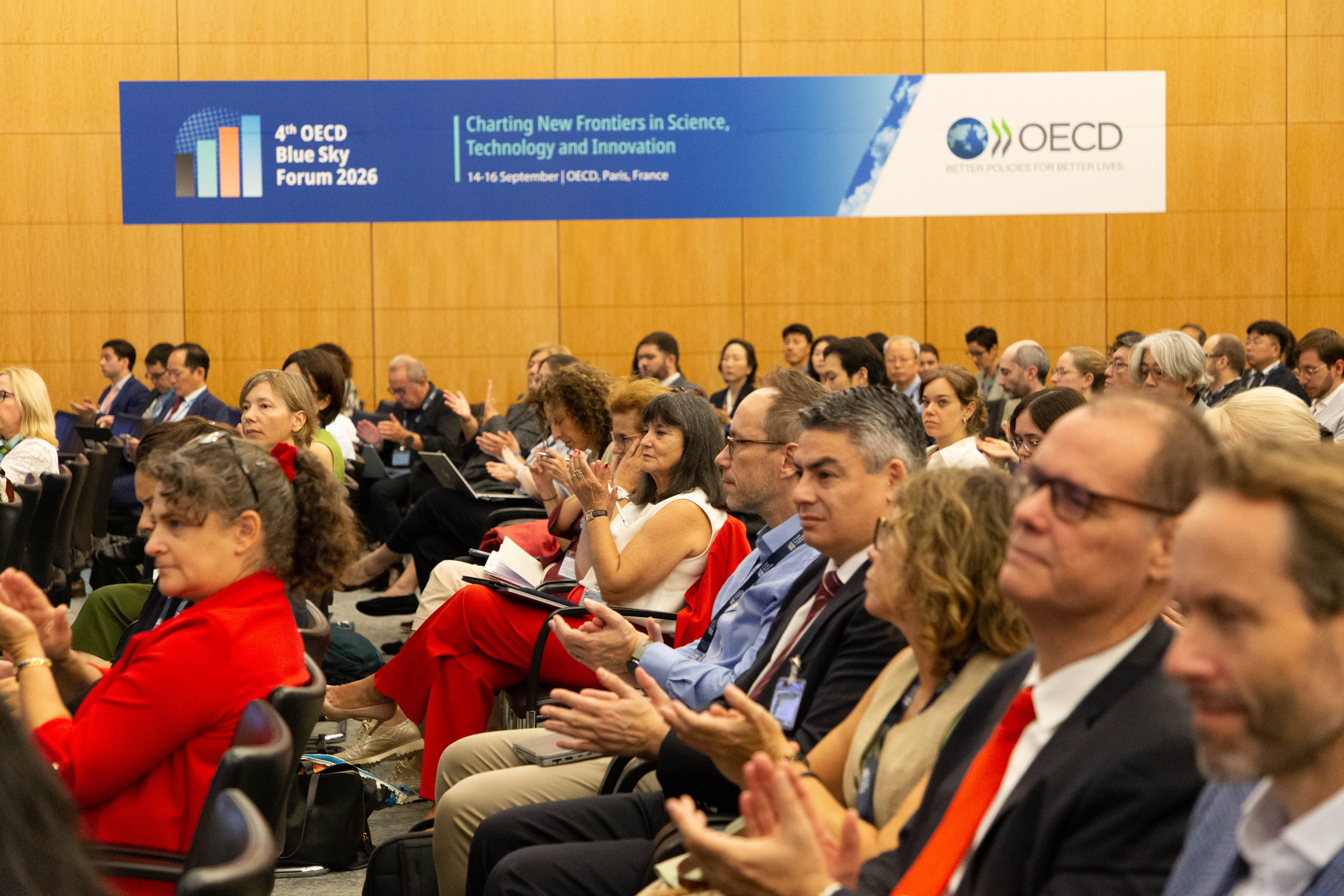
Nacaps at the 4th OECD Blue Sky Forum in Paris
Once every ten years, the OECD's Blue Sky Forum brings together international experts to discuss the future of data and indicators for science, technology and innovation. The DZHW was represented at the 4th OECD Blue Sky Forum this year: Dr. Isabelle Schiffer-Fiedler and Dr. Steffen Jaksztat presented the National Academics Panel Study (Nacaps) as an approach to the long-term study of research and innovation careers.From 14 to 16 September 2026, the 4th OECD Blue Sky Forum on Science, Technology and Innovation Data and Indicators took place at the OECD headquarters in Paris. Held only once every ten years, the forum brings together experts from academia, statistics, policy and research funding from different countries. At its core is the question of how new data, indicators and methods can help us better understand changes in science and innovation and support evidence-based policy.
Under the central theme "Pushing boundaries to chart the endless frontiers of science and innovation: Better data for policies and better policies for data", this year's forum addressed, among other topics, new data sources and AI-supported analytical methods, open science and research assessment, and the question of how research and innovation careers can be better captured in the future.
In the session "Official, administrative and publicly supported data on research and innovation careers: new sources, methods and insights", Dr. Isabelle Schiffer-Fiedler and Dr. Steffen Jaksztat presented Nacaps as a research infrastructure for the longitudinal study of the qualification and career paths of doctoral candidates and doctorate holders in Germany. Nacaps makes it possible to examine career paths and transitions within and outside academia over extended periods of time.
The international comparability of such data and the further development of suitable data infrastructures were central topics of the discussion.